



Are you fed up with dealing with tangles every time you brush your furry friend? Grooming long-haired pets at home might seem hard at first, but with a few basic tools, it can be much easier than you think.
Imagine smoothing out a favorite sweater by gently combing away knots and loose fur. Start with a slicker brush and a wide-tooth comb, these help pull away tangles without hurting your pet. A couple more simple tools can make the job even smoother.
This quick guide breaks the process into easy steps so you can groom safely without any stress, for both you and your pet.
Home Guide to Grooming Long Haired Pets
Using the right tools can make grooming simple and safe for your pet. A slicker brush with fine teeth works best for daily knots. It gently loosens tangles, much like carefully combing through a favorite sweater one row at a time to keep the coat shiny and neat.
Having the right tools makes a big difference. Here are some must-haves for grooming at home:
- Slicker brush: Helps remove daily knots and loose fur. With a few gentle strokes, it can turn a stubborn knot into a soft strand.
- Wide-tooth comb: Great for thicker fur. Use this after the slicker brush to smooth out any remaining tangles.
- Fine-tooth comb: Perfect for delicate spots or for finishing up areas that need extra care.
- De-matting brush or blunt-ended mat splitter: These tools work well on tight mats. They split stubborn clumps without cutting your pet's skin.
- Furminator deshedding tool: Use this once or twice a week to reduce shedding and keep loose fur under control.
- Grooming scissors: Ideal for trimming overgrown patches or small areas that need tidying. They let you make neat cuts while protecting your pet's skin.
- Waterless foams: Useful for a quick clean when a full bath is not needed.
Pick tools that match your pet's coat type for the best results. For a long-haired pet, you might combine a slicker brush and a wide-tooth comb to cover all bases.
Set up your grooming station with these tools to create a calm and effective routine. Not only will it make grooming easier, but it will also keep your pet comfortable and help avoid damage to their fur. For more tips on organizing your space, visit home pet grooming.
Brushing and Detangling Methods for Long Haired Pets
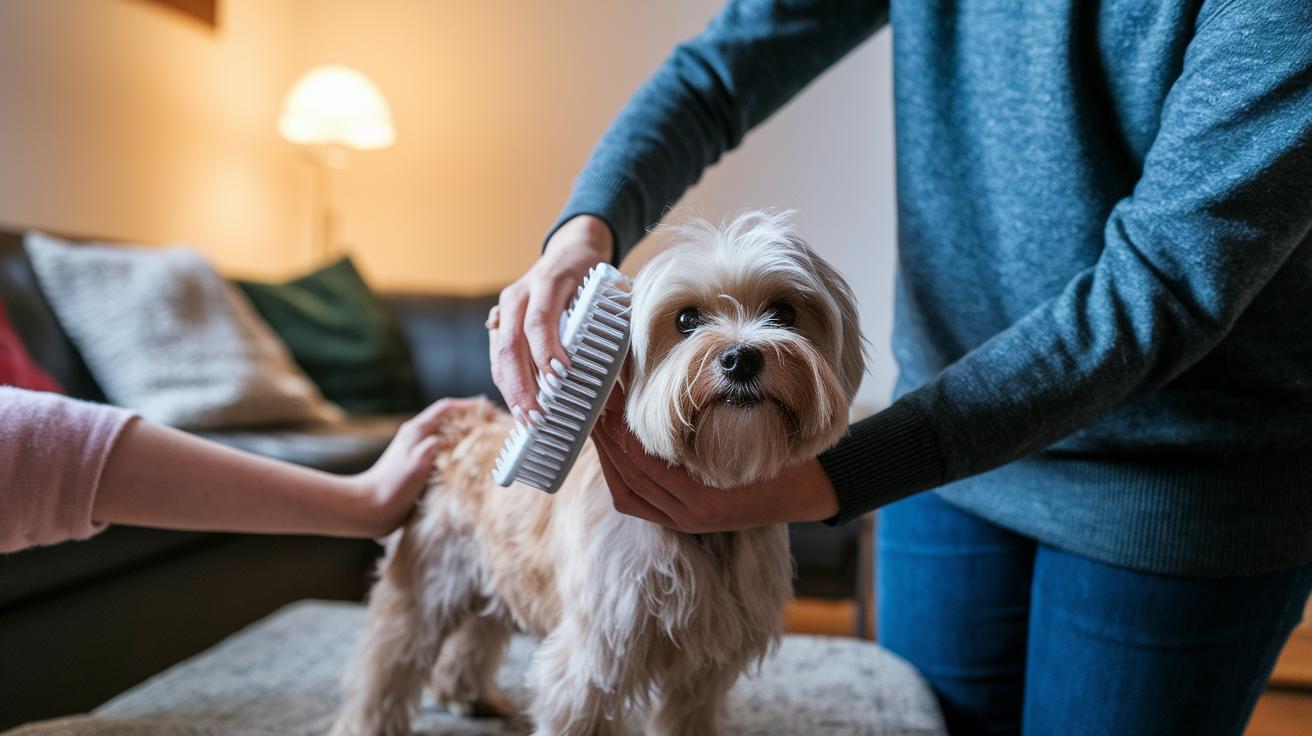
Start with a daily grooming routine using a slicker brush. This brush gently loosens loose fur and dead hair, much like combing through a thick, cozy blanket. Run the brush slowly over your pet's coat, paying extra attention to sensitive spots. Doing this helps stop rough tangles from forming and makes the next steps easier.
Next, use a wide-tooth comb to smooth out any stubborn knots. Run the comb slowly through the coat, and use your fingers to check for mats. If you come across a tight knot, spray a little detangling spray to soften it before combing further. Avoid home shaving, as it can hurt your pet's skin.
Keep each grooming session short and positive. Start with just a few minutes and give plenty of treats and kind praise. This reward-based method helps your pet feel safe and builds trust. As your pet gets more comfortable, you can slowly extend the grooming time.
Pay extra care to the areas where tangles often form, like behind the ears and around the belly. Work gently and follow the natural direction of the fur. If your pet seems uncomfortable, stop and try again later. A patient and calm approach makes grooming both safe and effective.
Regular practice is key. Consistent grooming not only prevents tangles but also helps your pet get used to each tool. One step at a time, observe your pet’s reactions, and adjust your method. With patience and gentle care, grooming becomes a happy routine for both of you.
Washing and Conditioning Routines for Long Haired Pets
If your pet’s long hair gets greasy, dirty, or starts to smell, it’s time for a bath. Use a gentle, pet-safe shampoo mixed with lukewarm water. This cleans the coat nicely without taking away the natural oils. Always rinse well to remove any shampoo that might irritate the skin.
For quick touch-ups or between full baths, try waterless foam shampoos or special cleaning wipes. These are great for a quick refresh without needing to wet your pet completely.
After washing, conditioning is essential. Use a pet-friendly conditioner made for long hair. It helps lock in moisture, softens the fur, and makes combing easier while adding a healthy shine. Rinse lightly so the coat stays light and bouncy.
Drying is just as important as washing. First, towel-dry gently to remove most of the water. If your pet is comfortable, use a blow dryer on low heat and keep it moving, never focus on one spot to protect their skin. Often, letting the coat air-dry in a warm space is the best option, especially for pets that get stressed by noise.
If your pet's skin seems dry or itchy after a bath, you might try a natural remedy. A diluted oatmeal rinse can soothe irritated skin while keeping your pet clean and comfortable.
Safe Trimming and Styling Techniques for Long Haired Pets

Make sure your pet’s coat is completely dry before you trim it. Dry fur lets you see how the hair naturally falls and helps the clippers work smoothly. Use clippers with the correct guard combs. Start at the back and move downward with smooth, even strokes. This creates a uniform look and helps you avoid accidental cuts. Work slowly around the ears, legs, and tail because those areas are more sensitive.
Switch to scissors for more detailed shaping. Use curved scissors along the body’s contours to follow natural curves, and use straight scissors on spots where the hair is too long. Blending scissors can soften the change between trimmed and untrimmed areas. For example, when trimming a frilly mane, make gentle cuts from the back downward. For extra tips, visit the pet grooming 101 page at https://petsnewz.com?p=1113.
Nail clipping is another important part of grooming. Hold your pet’s paw firmly and trim a small piece from each nail. If your pet has light-colored nails, look for a pink spot inside the nail. For dark nails, cut a little at a time until a small light spot is visible. Reward your pet for staying calm during nail clipping to help make it a positive experience.
Avoid using clippers or scissors on pets with double coats. Trimming too close can cause sunburn or skin irritation, and shaving can lead to permanent damage. Stick to trimming for a safe and comfortable grooming session that keeps your pet looking neat and feeling cared for.
Creating a Calming Grooming Environment for Long Haired Pets
Start by choosing a quiet spot where your pet feels safe. Try to groom after a good meal or a cozy nap. This helps your pet feel relaxed and ready for care.
Hold your pet gently with a soft towel or let them rest on your lap, which gives them comfort and security. Placing a non-slip mat on the floor can also help your pet stay steady and feel more confident.
Keep the first grooming sessions short, just a few minutes at a time. After each brief session, offer your pet a small treat and praise. Think of it like a mini spa day with a tasty reward at the end.
Here are a few simple tips to ensure a stress-free grooming experience:
- Schedule grooming sessions after meals or naps when your pet is calm
- Use gentle support such as a soft towel or lap hold
- Offer small rewards during and after grooming
These small changes can help create a pleasant routine that keeps your pet cooperative and comfortable during grooming sessions.
Troubleshooting Common Challenges in Grooming Long Haired Pets

During spring and fall, try brushing your pet every day. These seasons bring extra shedding, which can lead to tangles. Regular brushing helps keep mats from forming. Think of it like gently untangling a thick, fluffy scarf with a special brush, each careful stroke matters.
Keep a close eye on your pet's skin. Bathing too often can dry out their skin, causing irritation or redness. Stick to a routine that limits water exposure, and use mild, pet-safe shampoos only when needed. Short bath sessions help prevent extra stress for your pet.
If you notice tough mats, gently feel your pet’s fur, especially under the arms and near the belly. Spray a detangling solution and work through the knot with a wide-tooth comb. Don’t try to shave the area at home, as that might hurt their skin or make the irritation worse.
Quick tips for easy troubleshooting:
- Watch for signs of skin irritation like redness or bumps.
- Increase brushing during heavy shedding periods.
- Bathe only when absolutely necessary to keep the skin moist.
- Consider getting help from a professional groomer if mats persist or your pet becomes uncooperative.
If grooming seems to cause discomfort, it might be time to seek professional advice. A groomer or your vet can offer tailored guidance to keep your pet comfy and healthy while you manage its long, lovely coat.
DIY and Cost-Effective Grooming Strategies for Long Haired Pets
If you’re looking to save money and keep your long-haired pet neat at home, there are plenty of simple ideas to try. One easy trick is to make a gentle wash using everyday ingredients like oatmeal or baking soda. For example, mix 1 tablespoon of oatmeal with 2 cups of warm water (about 480 ml). Gently work it into your pet’s coat to soothe any irritated skin and add a healthy shine.
Another smart option is eco-friendly shampoo. These shampoos clean your pet without harsh chemicals and leave the coat soft. And on days when a full bath isn’t needed, waterless foams or grooming wipes work great for a quick clean-up. Picture wiping away some dirt and loose fur with a soft, fragrance-free wipe, fast and simple.
Here are some tips to remember:
- Try your own oatmeal wash at home.
- Pick eco-friendly shampoo options.
- Keep waterless foams handy for spot cleaning.
These cost-saving tips not only help your wallet but also promote sustainable care, making it easier to keep your pet comfortably clean between visits to the groomer.
Final Words
In the action, this guide walked through essential steps for managing long haired pets, from selecting brushes and combs to safe trimming and stress-free grooming routines. It broke down techniques for regular brushing, washing and conditioning, and even DIY solutions for budget-friendly care.
Following these steps shows exactly how to groom long haired pets at home. Keep practicing with these clear tips and your pet will stay healthy, safe, and happy.
FAQ
How do I groom long-haired pets at home using YouTube video guides?
The video guides detail step-by-step methods to brush, detangle, and trim long-haired pets. They show how to choose and use proper grooming tools safely to maintain healthy, mat-free coats.
How can I safely groom and trim my long-haired cat at home?
Grooming long-haired cats involves many steps. Start with daily brushing using a slicker brush and combs. Use grooming scissors for small trims while avoiding full shaving, and keep sessions calm and rewarding.
How can I groom my long-haired dog at home like professional groomers do?
Grooming long-haired dogs at home means using tools like slicker brushes, de-matting tools, and clippers with guard combs. These tools help remove loose fur and mats, resulting in a clean and even coat.
Why do groomers spray vinegar on dogs during grooming?
Groomers spray vinegar because it helps balance the skin’s pH, neutralizes odors, and acts as a mild disinfectant. This step supports clean, healthy skin and minimizes irritation during the grooming process.