


Ever wondered what’s really in your cat’s bowl? Many pet owners trust the box without a second look. But a quick look at the nutrition label can reveal important details about protein, fats, and other nutrients (the building blocks of a healthy diet). This guide shows you how to read labels and spot quality ingredients versus confusing terms. With clear tips and simple steps, you can choose a diet that truly supports your cat’s health.
Reading Cat Food Nutrition Facts Labels
When you choose cat food, start by looking closely at the ingredient list. The first ingredient should be a clear, named animal protein such as chicken breast or beef. Avoid unclear terms like "meat by-products" since they can hide lower-quality parts. If you see a specific meat like "salmon," you know it comes from a quality source.
Next, find the Guaranteed Analysis section. This area shows you the minimum amounts of protein and fat and the maximum amounts of fiber and moisture. These numbers help you compare different foods. Also, check if there is an ash content listed. A higher ash number may mean the food includes mechanically separated meat (a process that breaks down animal tissue), which is not as good.
Then, look for an AAFCO statement. This tells you the food is complete and balanced for a specific life stage, meaning it meets basic nutrition needs. Compare this statement with the feeding guidelines on the label. These guidelines, which consider your cat’s age, weight, and activity level, are very important. Indoor and older cats often need fewer calories than younger, more active cats.
Be careful with popular marketing words. Phrases like "rich in chicken" or "grain-free" can be misleading if they are not backed by clear nutrient numbers. For instance, while adult cats do well with about 25% carbohydrates, a diet for kittens should have closer to 18% carbs. Labels that say "veterinarian-validated" may not always provide details about the experts involved.
By taking these steps, you can decode every part of the label and make a smart choice for your cat. This careful review helps you support a balanced diet that keeps your cat healthy at every stage of life.
Understanding Protein, Fats, and Carbohydrates in Cat Food Nutrition Facts
Cats are natural meat-eaters and need good animal protein to stay strong. Look at the ingredients list and choose foods that name a specific meat, like chicken breast, instead of a vague term like meat meal. This helps ensure your cat is getting a high-quality protein source.
Fats are important too. They provide lots of energy and help keep cells healthy. Good fats like omega-3 and omega-6 (nutrients that keep your cat's coat shiny and skin healthy) are essential. Review the label to check the fat percentage so you can pick a food that gives enough energy without being too rich, especially if your cat is not very active.
Carbohydrates aren’t the main part of a cat’s diet but should still be balanced. Adult cats do well with about 25% carbohydrates, while foods with over 29% might have too many. Kittens, on the other hand, do best with closer to 18% carbohydrates to help them grow strong. You might also see crude fiber on the label; this supports digestion and helps control hairballs.
Different types of cat food also differ in calorie content. Dry kibble usually has more calories per cup than canned or fresh foods. Compare these numbers on the label to find the best match for your cat’s energy needs and keep them healthy and active.
Analyzing Vitamins and Minerals in Cat Food Nutrition Facts
Look at the ingredient panel for added vitamins and minerals because the Guaranteed Analysis does not show vitamin percentages. For example, vitamin A helps with clear vision and a healthy immune system. Vitamin D is key for strong bones, working with calcium and phosphorus to build and maintain them. Vitamin E and B-complex vitamins also support a good metabolism and a strong immune system. Think of it like a chef checking every ingredient to make sure a recipe is just right.
Trace minerals matter too. Calcium and phosphorus help keep your cat’s bones strong. They work best when balanced, usually in a 1:1 to 2:1 ratio. Zinc and copper help your cat maintain a shiny coat and good energy.
Other important antioxidants, like taurine, boost heart and eye health. You might not see these in the Guaranteed Analysis, so check the ingredients list closely. It is the best way to tell if your cat is getting all the tiny nutrients they need.
Review all these details along with the everyday nutritional facts to make a smart choice for your cat’s diet.
Evaluating Ingredient Quality and Additives in Cat Food Nutrition Facts
Check the ingredient list to make sure the meat comes from a clear, quality source. If you see names like turkey breast or salmon, that means the protein is clearly identified. Be careful if you see words like meat meal or VSM, which stands for mechanically separated meat. These words can hide lower-quality ingredients.
Look for natural additives next. For example, rosemary extract or mixed tocopherols help keep the food fresh without artificial chemicals. Some brands still add synthetic preservatives like BHA or BHT. These can sometimes trigger allergies or make sensitive cats feel unwell.
Remember that words like grain-free or gluten-free do not mean the food has no carbs. Carbohydrates naturally occur in meat and vegetables. These labels are often used for marketing, not because they show higher quality.
Also, check if the packaging displays any regulatory or organic standards. These claims may mean better animal welfare practices, but it is still smart to compare all the ingredients listed.
A quick tip: many pet parents noticed that switching from a vague meat meal to a clearly named premium protein helped reduce their cat’s skin problems.
- Look for specific meat names
- Spot natural versus synthetic preservatives
- Weigh marketing claims against the actual ingredient list
Comparing Dry, Canned, and Fresh Cat Food Nutrition Facts
Dry kibble contains around 10% moisture and packs more calories than other types of food. Its nutrition label often shows about 30% carbohydrates (mostly coming from grains or plant ingredients). Plus, the crunchy texture helps scrape off plaque, which can improve your cat's dental health.
Canned food generally has about 75% moisture. This high water content means it has lower carbohydrates and, on a dry matter basis (nutrients recalculated without water), it tends to be richer in protein and fat. The extra moisture also helps keep your cat well-hydrated, especially if they aren’t big water drinkers.
Fresh or raw diets usually include 80% to 85% moisture. Because these diets are minimally processed, they keep more natural enzymes and nutrients that might be lost during high-heat processing. However, they require careful handling to ensure they remain safe to eat.
Keep in mind that moisture levels affect the percentages of protein, fat, and fiber. Converting these values to a dry matter basis makes it easier to compare different types of food. In short:
| Type of Food | Moisture Content | Calories | Key Benefits |
|---|---|---|---|
| Dry Kibble | About 10% | High | Helps reduce plaque buildup |
| Canned Food | About 75% | Lower (when compared on a dry matter basis) | More protein and fat; aids hydration |
| Fresh/Raw Diet | 80–85% | Varies | Preserves natural enzymes and nutrients |
Think about your cat’s energy needs and their drinking habits to choose the right type of food. Dry kibble offers more calories and dental benefits, canned food gives a boost in moisture and vital nutrients, while fresh diets provide natural nutrition with minimal processing.
Customizing Cat Food Nutrition Facts for Life Stages and Health Goals
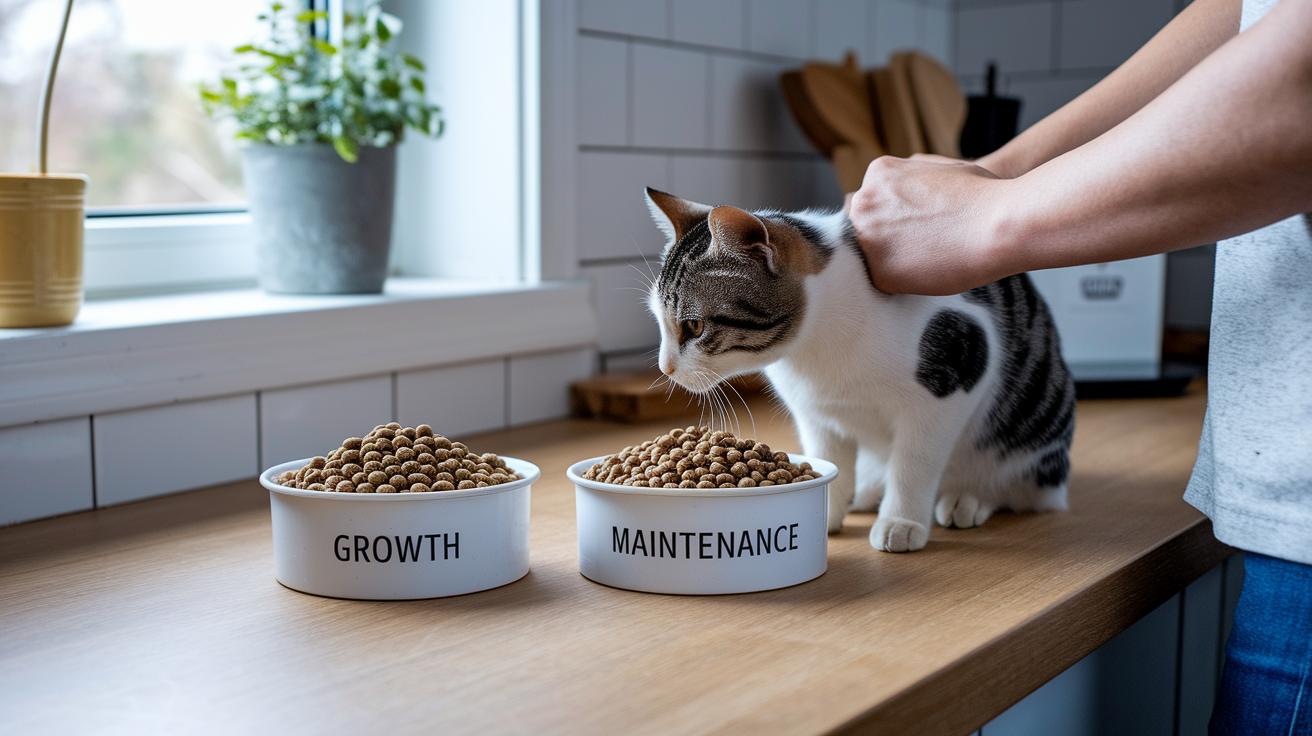
When you pick a cat food, match it to your pet's age. For kittens, look for a label saying the food is meant for growth. Kittens need lots of protein and fat with only about 18% carbohydrates. For example, if you see "AAFCO growth" on the package, it means the food is designed to help kittens build strong muscles.
For adult cats, choose food that shows a "maintenance" label. Their meals should have a balanced mix of proteins, fats, and carbs, usually around 25% carbs. Check the feeding guidelines on the package and adjust the portions as your cat's weight and activity level change. A simple tip is to review the minimum and maximum feeding amounts to match their energy needs.
Older cats need fewer calories and extra fiber for healthy digestion. They might also benefit from ingredients that support joint movement. Always read the feeding guidelines, especially for indoor or less active kitties that may require smaller portions and less kidney-stressing phosphorus. If you notice your senior cat slowing down, consider switching to a formula with fewer calories and more fiber.
Always compare the label details with your vet's recommendations. Use the nutritional percentages and feeding guidelines to set the right portion sizes. Keep in mind your cat's exercise level, weight, and overall health when planning daily meals, so the diet fits their age and health goals perfectly.
Final Words
In the action, this post showed you how to read every part of a cat food label. You learned to spot high-quality ingredients, check the guaranteed analysis, and compare feeding guidelines for different life stages. The tips on vitamin and mineral content help you see what fuels your cat best. With this Cat Food Nutrition Facts Guide, you can feel more confident in finding the right balance to keep your pet healthy, safe, and happy.
FAQ
What does a wet cat food nutrition facts guide explain?
The wet cat food nutrition facts guide explains key details about moisture levels, protein, fats, fiber, and calories. It helps pet parents understand how canned food supports their cat’s overall nutrition.
What is provided by a cat food nutrition facts guide PDF?
The cat food nutrition facts guide PDF offers a downloadable resource with detailed charts on ingredient lists, nutrient percentages, AAFCO statements, and feeding guidelines, making it easier to assess a cat’s diet.
What do a cat nutrition requirements chart and overall nutritional requirements cover?
A cat nutrition requirements chart outlines essential nutrients such as proteins, vitamins, and minerals across different life stages, ensuring diets meet the specific needs of growing, adult, and senior cats.
What is included in the best cat food nutrition facts guide?
The best cat food nutrition facts guide compiles clear charts that show ingredient quality, nutrient percentages, AAFCO assurances, and feeding guidelines, helping pet parents choose balanced and safe diets.
What details does a dry cat food nutrition chart display?
The dry cat food nutrition chart displays important values like protein, fat, fiber, and moisture percentages in kibble. It helps owners compare energy content and ingredient quality across different brands.
What does cat food protein per 100g indicate?
Cat food protein per 100g indicates the amount of protein found in each 100 grams of food. This helps owners confirm that their cat receives enough high-quality protein for muscle and overall health.
What are the top 5 healthiest cat foods based on nutrition facts?
The top 5 healthiest cat foods are those that list high-quality, specific protein sources, balanced nutrients, clear AAFCO statements, and minimal synthetic additives, ensuring your feline friend enjoys a balanced and safe diet.