


Have you ever looked at a pet food label and felt puzzled by all the ingredients and numbers? Many pet parents feel overwhelmed when faced with a long list of words and figures. These labels offer hints about protein (the building block for muscles), fat (a source of energy), and a mix of nutrients your pet needs to stay healthy. In this guide, we break things down into simple steps so you can confidently pick the best food for your furry friend.
Understanding Key Components on Pet Food Nutrition Labels
Pet food labels tell you what’s in your pet’s meal. The ingredients list shows items from the heaviest to the lightest before cooking. If you see chicken or beef at the top, that meat is your pet’s main source of nutrition. Look for ingredients you recognize to decide if the food is right for your pet.
The guaranteed analysis section shows the percentages of protein, fat, fiber, and moisture. These numbers give you a basic idea of the food’s makeup. Sometimes the values are minimums, which means the food may contain a bit more than listed. This section helps you figure out if the food meets your pet’s energy needs.
Feeding guidelines on the package provide a recommended amount, but they are just a starting point. You might need to adjust portions based on your pet’s size and activity level. It can help to calculate your pet’s daily calorie needs to get the right amount.
Another key part is the nutritional adequacy statement, often marked as “complete and balanced.” This means the food has been tested to meet standards set by agencies like AAFCO (Association of American Feed Control Officials). It tells you that the food provides the right nutrients for your pet’s life stage.
Finally, check the life stage on the label, such as puppy, adult, or senior. Matching this with your pet’s age ensures they get the proper nutrients and helps prevent overfeeding or nutrient imbalances.
Interpreting Ingredient Listings on Pet Food Nutrition Labels

When you check a pet food label, the ingredients are listed in order of weight before they are cooked. This means the first few items, usually meat like chicken or beef, provide most of the nutrition. If chicken is at the top, you can trust that it is the main source of protein.
Look closely at the order of the ingredients. Items listed first make up most of the food, so if you see a good quality meat followed by names you recognize, the recipe is likely more honest.
Also, remember that AAFCO guidelines (rules set to ensure pet food meets nutritional standards) allow for broad terms that can sometimes hide lower-quality ingredients as by-products. For a quality product, check that the label shows recognizable meat proteins at the beginning. It helps if the label tells you if the meat is deboned or ground.
When reviewing pet food labels, keep these points in mind:
- Ingredient order
- Presence of high-quality meat proteins
- Use of generic terms that might hide lower-quality by-products
This simple guide can help you feel more confident about choosing food that provides the true nutrition your pet needs.
Decoding the Guaranteed Analysis on Pet Food Nutrition Labels
The guaranteed analysis is a quick look at what nutrients are in your pet’s food. It shows percentages for protein, fat, fiber, and moisture, plus a number for crude ash (the minerals in the food). Remember, the protein, fat, and fiber numbers are minimum values, while the moisture number is the highest allowed. That means a bag labeled with 27% protein could actually have even more protein inside.
Manufacturers must include these numbers, but small changes in production can make each batch a little different. For example, while the label guarantees a minimum protein level, your pet might get a bit extra protein in some cases. Think of it like baking cookies, sometimes you find a few extra chocolate chips.
Moisture is given as a maximum value. This is why comparing dry kibble, canned food, and raw diets can be tricky. Canned food, with its higher moisture, might show lower percentages for protein and fat because the water makes up some of the weight. Using a dry matter calculation can give you a clearer picture.
Crude ash tells you about the level of minerals needed for your pet’s body functions. While these numbers are helpful, they don’t show you the full story about nutrient quality. Always check the other details on the label to make the best choice for your pet.
- Guaranteed analysis lists minimums for protein, fat, and fiber
- Moisture is listed as a maximum value
- Crude ash shows the mineral content
Understanding these details can help you feel more confident in choosing the right food for your pet.
Converting to a Dry Matter Basis on Pet Food Nutrition Labels
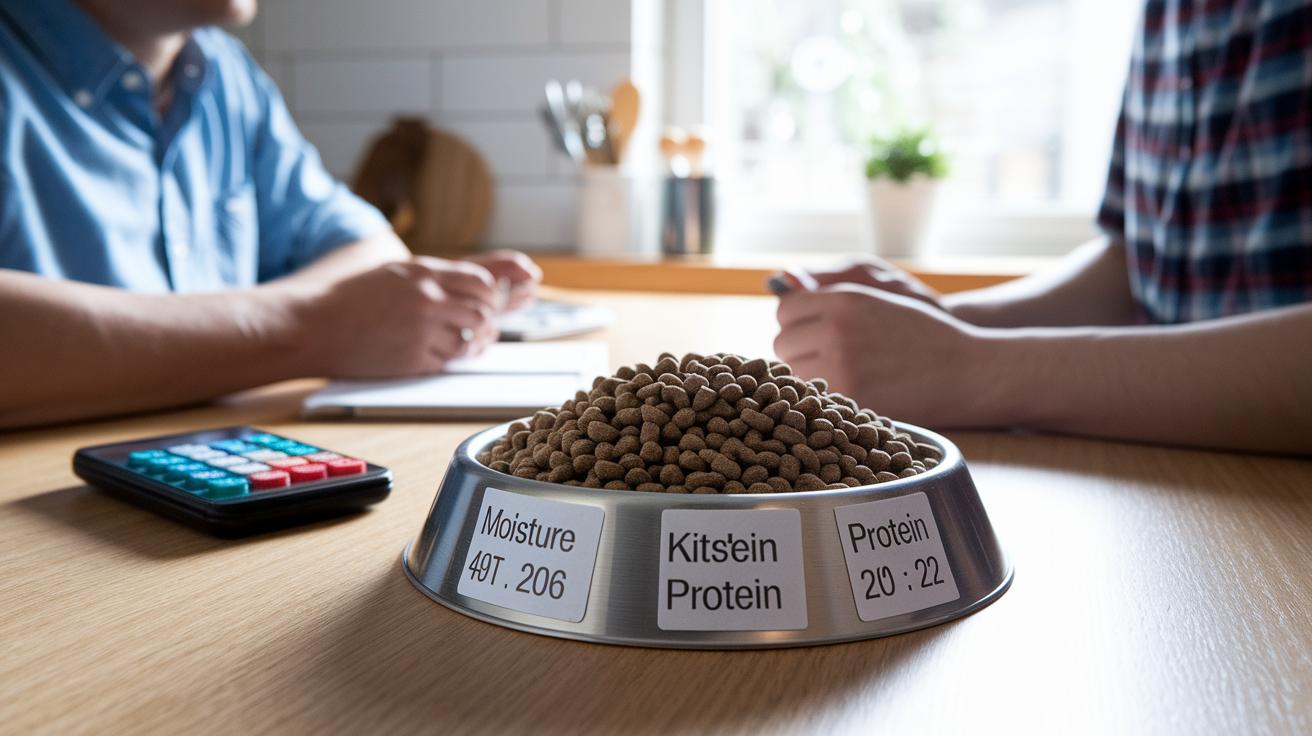
When you’re picking pet food, remember that different foods have different water amounts. Using a dry matter basis helps you compare nutrients like protein, fat, and carbs even when the moisture levels vary.
Here’s how to do it: First, find the dry matter percentage by subtracting the moisture percentage from 100%. For example, if a food has 70% water, its dry matter percentage is 30%. Next, take the nutrient percentage on the label and divide it by the dry matter percentage. So, if a food shows 15% protein and the dry matter is 30%, the protein on a dry matter basis is 15 divided by 30, which equals about 50%.
Try these simple steps:
- Calculate dry matter percentage: DM% = 100% minus the moisture%.
- Find the nutrient’s value on a dry matter basis: Nutrient dry matter value = (Nutrient %)/(DM%).
- For carbohydrates, subtract the percentages of protein, fat, fiber, water, and ash from 100%.
It may sound surprising, but a pet food with 15% protein might actually deliver nearly 50% protein on a dry matter basis. Using this method makes it easier to compare dry, canned, or raw foods so you can choose the best option for your pet.
Reading Nutritional Adequacy Statements and Feeding Guidelines on Pet Food Nutrition Labels
When you see a phrase like "complete and balanced" on pet food, it means the food has enough of the right nutrients for your pet. These standards are set by groups like AAFCO (Association of American Feed Control Officials) and the FDA for different pets, whether you have a growing puppy, an active adult, or a senior.
The feeding guidelines on the package are a helpful starting point. They show a suggested portion based on your pet’s size and age. For a more precise idea, try figuring out your pet’s daily calorie needs. Fun fact: active pets might need up to 25% more calories than the standard recommendation.
Steps to use:
- Match the life stage on the label with your pet’s current stage.
- Use the feeding guidelines as your baseline.
- Calculate your pet’s daily calorie needs to adjust the portion size.
If the label says "complete and balanced for adults," it means the food has been tested and meets the nutritional standards needed for adult pets.
Spotting Misleading Claims and Regulatory Standards on Pet Food Nutrition Labels

Pet food bags often use words like natural, premium, or holistic to grab your attention. But these terms are not regulated, so they don’t guarantee top-notch ingredients. Sometimes they hide fillers or low-quality by-products. Always check the full ingredient list and look for real meat proteins listed near the start.
Another good trick is to check the manufacturer stamp. If you see "Made By…" it usually means the company has tight quality control. On the other hand, "Manufactured For…" might mean the food is made in a shared facility. This small detail can show whether the food is made with extra care or in a larger, less personal operation.
Make sure the marketing claims match up with the guaranteed analysis on the label. If the product says it’s natural, the ingredient list should include clear meats or vegetables that back up that claim. You want the packaging, ingredient list, and nutritional details to all tell the same story.
| Tip |
|---|
| Read the complete label carefully. |
| Check for AAFCO or FDA nutritional adequacy statements. |
| Ensure that high-quality ingredients match the marketing language. |
Comparing Dry, Canned, and Raw Pet Food Nutrition Labels
Pet food labels can be confusing because the water content changes the nutrient numbers. Dry kibble usually has about 6 to 10% water, so its proteins, fats, and carbohydrates appear more concentrated. Canned food, however, contains around 70 to 80% water, which lowers the labeled nutrient percentages. Raw diets typically sit in between with about 60 to 70% water.
To compare these foods properly, use dry matter calculations (a method to measure nutrients without the water). For instance, a canned food showing 8% protein might actually have a higher protein value when you adjust for the water content.
The texture and processing of each type also differ. Dry kibble comes out firm from baking or extrusion (a process that shapes food by forcing it through a small hole). Canned food is often soft, like a pate or stew, and raw diets come in chunks that feel more natural. These differences can affect how well your pet chews and digests its food.
Here are a few simple steps to help you decide:
- Subtract the water percentage from 100 to get the dry matter base.
- Compare the nutrient values on this dry matter basis.
- Consider if the texture suits your pet’s chewing habits.
Using these tips, you can better understand the true nutrient value of each food and make a confident choice for your pet's diet.
Understanding Pet Food Nutrition Labels: Make Confident Choices

Use your pet food label as a helpful guide to keep your pet healthy. First, figure out how many calories your pet needs each day by comparing their weight, age, and activity level. Look at the feeding suggestions on the bag, and then adjust the portions if needed based on your own calculations.
Always follow the storage and expiration tips on the label. Store your pet’s food in a cool, dry place and watch the expiration date. This helps the food stay fresh and keeps the nutrients working as they should.
If your pet has tummy troubles, think about adding a supplement for digestion (something that helps break down food more easily). But remember, check with your vet before introducing any new supplement into your pet’s diet.
For advice that fits your pet’s needs, talk to a veterinary nutritionist or use remote consultation services. These experts can help adjust meal amounts if your pet needs to manage weight or if specific supplements might support their overall health.
- Calculate calories accurately.
- Store food properly.
- Use supplements only as recommended.
- Get expert advice.
Final Words
In the action, you learned how to break down pet food labels to check ingredient lists, guaranteed analysis, dry matter conversions, and feeding guidelines. Each piece of the label helps uncover key details, from quality proteins to misleading terms that hide flaws. Clear tips guided you through comparing formulas, making safe choices, and adjusting diets based on your pet’s needs.
Keep using your insights about Understanding Pet Food Nutrition Labels to ensure your pet stays safe, healthy, and happy.
FAQ
How do I read dog food nutrition labels?
Reading a dog food nutrition label means checking the ingredients list, guaranteed analysis (protein, fat, fiber, moisture), feeding guidelines, and nutritional adequacy statements set by AAFCO.
What does 80-10-10 mean in dog food?
The 80-10-10 ratio means the food is made up of 80% lean meat, 10% fat, and 10% carbohydrates, offering a balance that supports energy and muscle maintenance for active dogs.
Is 30% protein too high for dogs?
A 30% protein ratio can be beneficial for active or working dogs, but the ideal amount depends on your pet’s age, activity, and health conditions. Consult your vet to determine the best protein level.
What is the 25 rule for pet food?
The 25 rule indicates that at least 25% of the pet food formula should consist of a quality meat source, helping to ensure the product offers substantial, nutrient-rich ingredients for healthy growth.
How can I find templates or PDFs to understand pet food nutrition labels?
Searching online for free templates or PDFs provides visual guides that explain key label components such as ingredients, guaranteed analysis, and feeding recommendations, making it easier to compare products.
What are pet food label requirements?
Pet food label requirements call for an ingredients list by weight, a guaranteed analysis section, feeding guidelines, and a nutritional adequacy statement that meets AAFCO standards to assure balanced nutrition.
Where can I find the AAFCO pet food Labeling Guide PDF?
The AAFCO pet food Labeling Guide PDF is accessible on the official AAFCO website and reputable pet industry sites, offering detailed guidelines to help understand and evaluate pet food labels.