

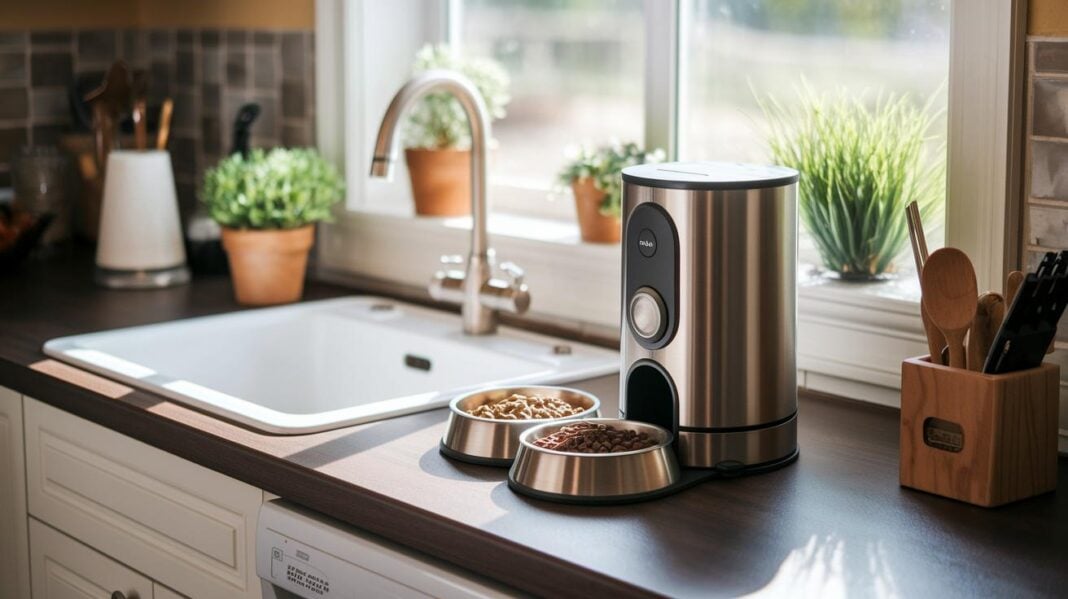

Ever thought about letting a smart machine handle your pet's mealtime? Automatic feeders do more than just dish out food. They help keep your pet on track with regular meals and make daily routines a lot easier. Think of it like having a friendly neighbor who makes sure your furry friend never misses a bite. This guide will show you how these handy gadgets work, so busy pet parents can enjoy a simple and steady feeding schedule.
Automatic Pet Feeder Buyer’s Guide
Automatic pet feeders make feeding your pet easier by scheduling meals for you. For example, the Feeder-Robot sets up regular meal times and shows feeding details on the Whisker app. When choosing a feeder, look for features like on-time meals, proper portion sizes, and simple monitoring. Most models serve 5 to 8 small meals a day, so it’s key to find one that fits your pet’s habits and your daily routine.
There are many types of feeders. You can choose from gravity-based models that let food drop out on their own, programmable feeders with built-in timers, and smart WiFi feeders that let you watch your pet with a camera. Some feeders even use microchip or RFID tags so that only your pet can access the food. Experts say that each cat should have its own feeder to prevent overfeeding and recommend not leaving a feeder unattended for more than 48 hours.
Consider these factors when shopping:
| Factor | Description |
|---|---|
| Feeder type | Choice of gravity, programmable, smart, or microchip-based models |
| Capacity | How much food it can store |
| Power options | Battery, AC, or both |
| Food compatibility | Works with dry food, wet food, or both |
| Scheduling flexibility | The ease of setting and adjusting meal times |
| Connectivity features | Remote notifications and monitoring, like cameras |
| Budget | Price range that fits your wallet |
When you compare these details, start with your pet’s needs and your home routine. Look at different models to choose one that matches your pet’s eating habits and fits in your space. For busy pet owners, a smart feeder with remote alerts might be best. If you have a single pet and a relaxed schedule, a simple gravity-based feeder could work just fine. Check the feeder’s capacity and power source to ensure it can handle the food supply during your absence. Finally, balance the tech features with your budget to find one that truly offers convenience and value.
Essential Features of an Automatic Pet Feeder
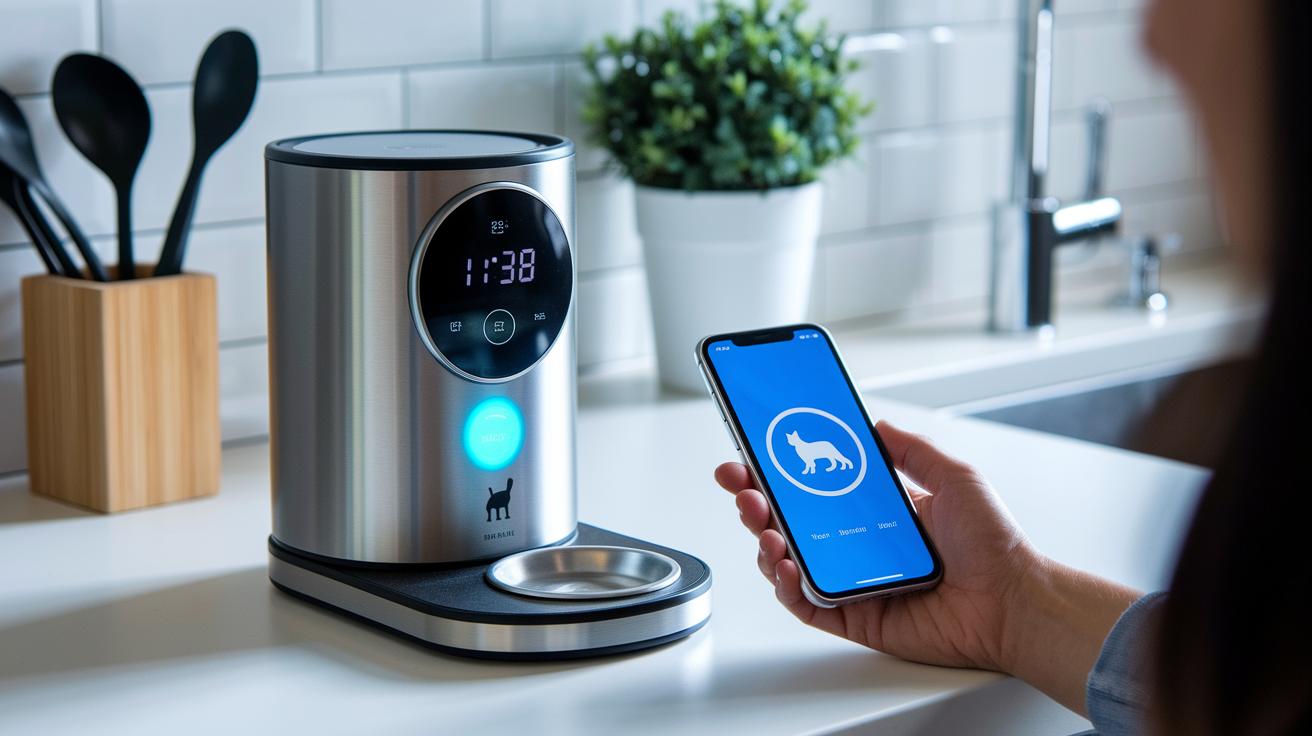
Smart pet feeders use a mix of hardware and software to make feeding your pet both simple and safe. For example, QuietSift technology cuts down the noise. In one test, feeders with QuietSift were 20 dB (a measure of sound) quieter than regular feeders.
The SafeCat System with OmniSense Detection improves on basic sensors. It uses lasers, weight checks, and scans for obstructions. Studies show this system leads to fewer feeding mistakes.
- Built-in meal timer you can set in advance
- Portion control that adjusts to your pet’s needs
- Backup battery to keep the feeder running during a power cut
- WiFi hookup and a mobile app for control
- Alerts sent to your phone when feeding happens
- Parts that are easy to take apart and safe to put in the dishwasher
- Tough materials that are safe for pets
- Safety sensors to monitor weight and check for obstacles
Choosing a feeder with these features helps you keep a steady feeding routine. Testing different models in everyday situations, and using a checklist, makes it easier to decide which one is best for your pet’s safety and your needs.
Reviews: Top Automatic Pet Feeders for Cats and Dogs
We looked at each feeder for how well it dispenses food, how much food it holds, its build quality, and how easy it is to use every day. We tested each one to see if it gives the right amount of food over many cycles and to make sure setting it up is simple. We also checked whether the feeder works with dry food, wet food, or both. Some even let you use an app or a camera so you can see your pet eating.
| Model | Food Type | Key Features | Capacity (cups) | Price Range |
|---|---|---|---|---|
| PetLibro Air WiFi Feeder | Dry | Very accurate dispensing, app control | 10 | $$$ |
| PetLibro Polar Wet Food Feeder | Wet | Keeps meals fresh up to 3 days, easy to clean | 8 | $$$ |
| HHOlove Smart Feeder with 360° Camera | Dry | Live monitoring with 360° camera, smart alerts | 8 | $$$$ |
| SureFeed Microchip Cat Feeder | Dry | RFID access prevents food stealing | 4 | $$ |
| WOPET Automatic Pet Feeder | Dry | Large capacity for long trips, reliable dispensing | 29 | $$ |
If you need precise meal control, the PetLibro Air WiFi Feeder is a great choice for both cats and small dogs. For pet parents who prefer wet food, the PetLibro Polar Wet Food Feeder keeps meals fresh and is really easy to clean. Want to see your pet eating? The HHOlove Smart Feeder gives you a full 360° view and sends helpful alerts. In a home with several cats, the SureFeed Microchip Cat Feeder makes sure each cat gets its own meal. And if you're planning to be away for a while, the WOPET Automatic Pet Feeder holds a whopping 29 cups (about 6.96 L) of food to keep your pet fed.
Setup and Connectivity of Wifi-Enabled Automatic Pet Feeders
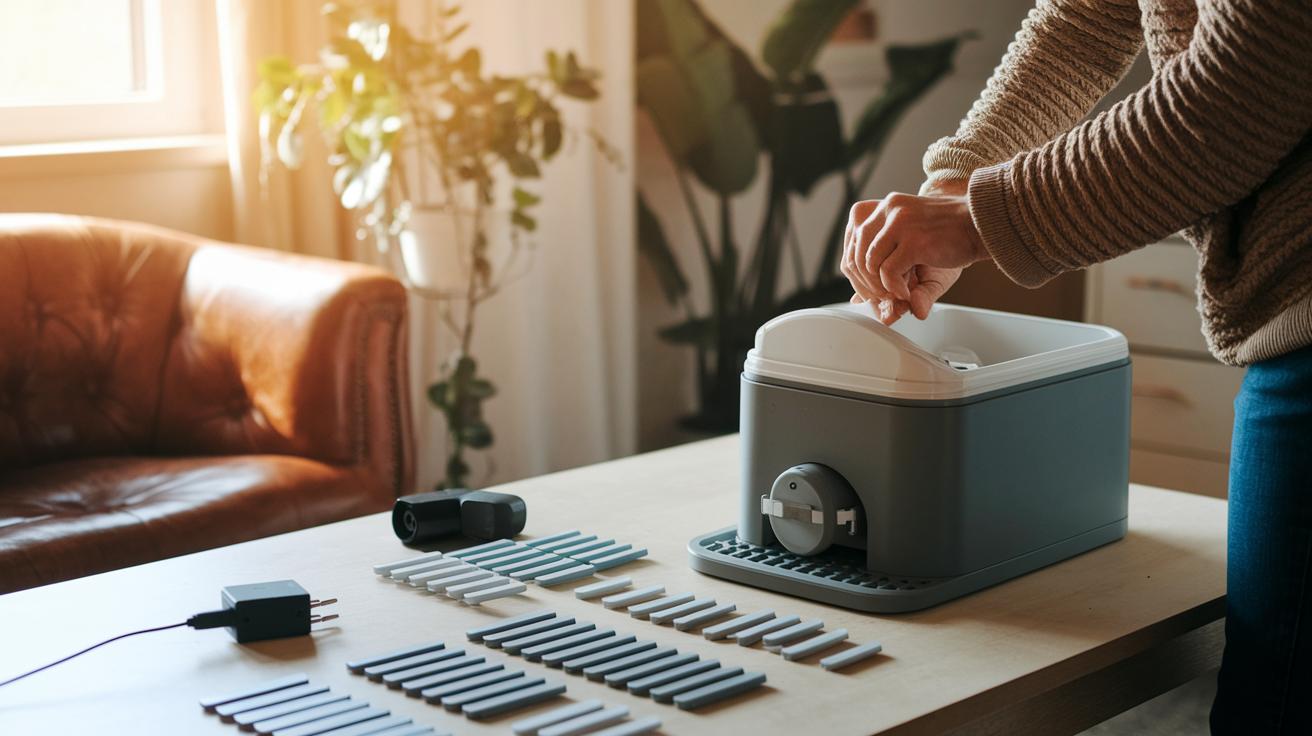
Begin by opening the box and laying out all parts. Check the list to make sure you have every item, like the power adapter, base unit, and any extra cables. Follow the easy assembly instructions as you put on the secure lid and attach the needed parts. Then plug it into your outlet so it gets power and is ready to set up.
Next, grab your phone and open the feeder’s app to join it to your home network. Depending on your router, pick either a 2.4 GHz or 5 GHz connection. Use the app to scan the QR code on the feeder to link it fast and safely. This step lets you schedule meals and keep track of feeding details right from your phone.
Finally, use the app to set meal times, turn on alerts, and adjust the camera settings if needed. Enter your pet’s feeding schedule so you get a quick push notification when food is dispensed. Now, your pet feeder fits right into your smart home setup, giving you control and peace of mind.
Maintenance and Troubleshooting Automatic Pet Feeders
Clean your pet feeder regularly to keep it working well and safe for your pet. Remove all parts you can and wash them in warm, soapy water. Wet-food feeders need a daily clean so food stays fresh. Be sure to dry every piece completely before putting it back together. Also, gently wipe the sensor and motor with a soft cloth. This simple routine stops food buildup and helps prevent jams.
Check the power and battery areas often. The backup battery, which usually lasts 2 to 5 days, should hold its charge well. Look over the power cord and wires for any signs of wear or damage. When the feeder is not in use, store it in a clean and dry place to keep dust and moisture away. These steps help your feeder last longer and run smoothly day after day.
If you ever find the feeder jamming or not giving out food, first turn off the power. Then check for and clear any blockages. If the problem continues or the battery runs down faster than expected, reach out to customer support for help.
Pricing, Warranty, and Support for Automatic Pet Feeders
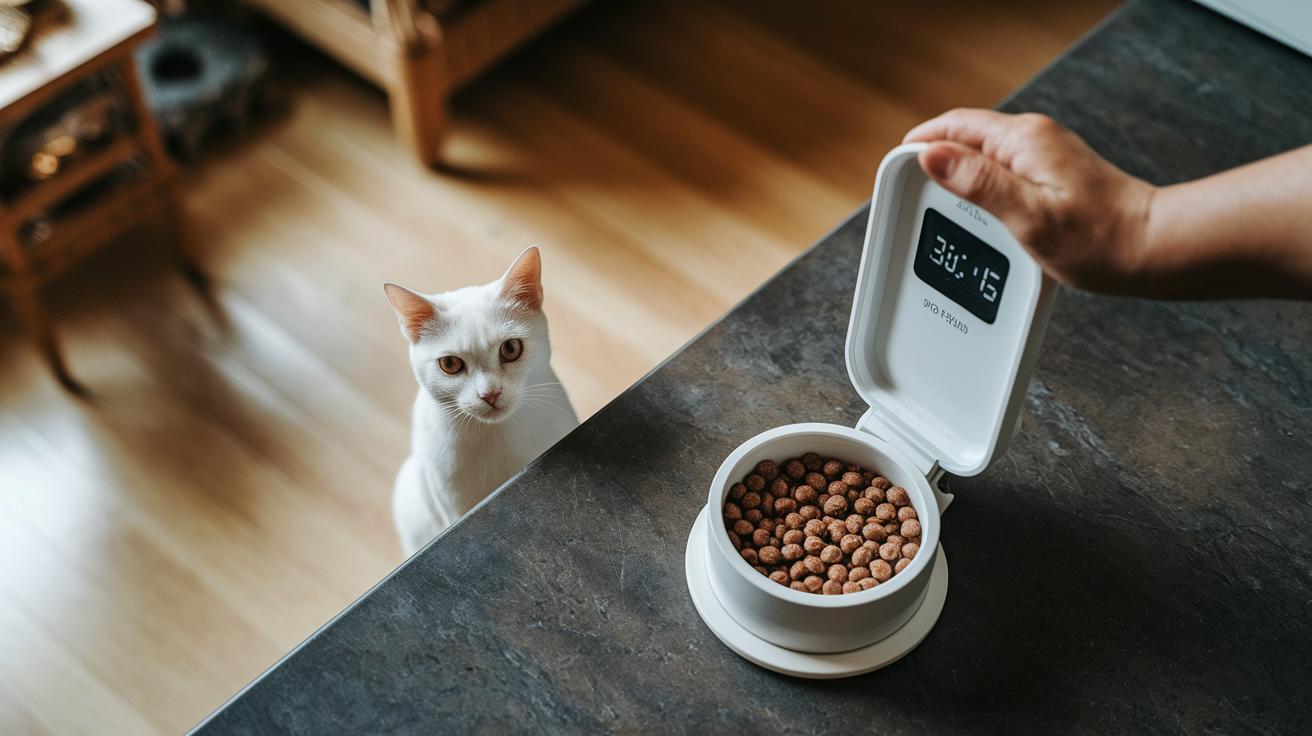
If you need a simple way to feed your pet, entry-level feeders like the Cat Mate C500 are a great choice. These models let you set portions by hand and usually come with a 1-year warranty. They cover basic feeding needs and work well if you want a reliable feeder without any extra bells and whistles. The customer support is standard, so they answer everyday questions without offering extra help.
On the other hand, premium feeders such as the PetSafe Eatwell and the WOPET 29-cup model provide more features and value. They have energy-saving designs that cut down on power use when not feeding, and they often come with warranties of up to 2 years. These feeders also handle treats and medications better, ensuring your pet gets exactly what it needs. Plus, the support team for these models is usually more responsive, making them a solid choice if you want long-lasting performance and extra peace of mind.
Final Words
In the action of selecting the perfect automatic pet feeder, this guide breaks down key features, reviews, and practical maintenance tips.
A quick recap covers feeder types, feeding schedules, and connectivity, all critical in keeping pet meals on track.
We discussed important factors like capacity, safety sensors, and battery backup to help you decide on the right model.
Choosing a smart, easy-to-use automatic pet feeder simplifies everyday routines and helps keep your pet healthy and happy. Enjoy a smoother feeding experience with confidence.
FAQ
What defines an automatic cat feeder for wet food?
The automatic cat feeder for wet food is designed to keep wet meals fresh and dispense accurate portions at scheduled times, helping maintain your cat’s routine without immediate supervision.
How does an automatic pet feeder with a camera work?
The automatic pet feeder with a camera lets you remotely view your pet eating, schedule meals, and even receive notifications, making it easier to monitor and care for your pet when you’re away.
What makes an automatic pet feeder the best for my pet?
The best automatic pet feeder offers accurate portion control, reliable scheduling, and user-friendly connectivity features. It should fit your pet’s dietary needs and your lifestyle with seamless operation.
How do automatic pet feeders handle multiple cats?
Automatic feeders for multiple cats often feature separate portion controls or RFID-based access, ensuring each cat receives the right amount of food during scheduled feeding times.
What features suit automatic dog feeders for large breeds?
Automatic dog feeders for large breeds are built with higher food capacity and a sturdier construction to manage bigger portions, while ensuring accuracy to meet the nutritional demands of larger dogs.
Can I find an automatic pet feeder near me?
You can locate an automatic pet feeder near you by checking local pet stores and online retailers that offer pickup services, making it convenient to purchase a model that meets your pet’s needs.
Do vets recommend automatic feeders for pets?
Vets often recommend automatic feeders to help maintain structured meal times but advise using one feeder per pet and keeping them attended within 48 hours to avoid issues from unsupervised operation.
Can I leave my cat alone for three days with an automatic feeder?
Leaving a cat alone for three days is not recommended with an automatic feeder, as no system should run unattended beyond 48 hours. Extra care is needed for longer absences.
What are the downsides of using automatic feeders?
Downsides include potential mechanical failures, dependency on power or battery backups, and sometimes limited flexibility for dietary changes. Always check model reviews and plan for backup options.
What types of automatic pet feeders are available?
Automatic pet feeders come in various models, including those with WiFi connectivity, RFID access, and built-in cameras. Examples are Petlibro Granary WIFI, PETLIBRO One RFID, PetSafe smartfeed, and Whisker City, each offering distinct features for different pet needs.