



Have you ever noticed that simple training methods can change your dog's behavior? Advanced obedience techniques help your pup stay focused and avoid distractions on walks and at home. Short, fun sessions let your dog pick up commands quickly. Each good move is rewarded, turning training into a relaxed and happy time. In this article, we show you how these methods can make daily routines easier and strengthen the bond between you and your pet.
Mastering Elite Obedience Strategies for Dogs
Advanced training helps you enjoy daily walks and indoor time with your dog by reducing pulling on the leash and too much barking. These tips work both at home and outside, creating a calm setting that makes life easier for you and your pet. Short sessions of 5 to 10 minutes let your dog focus without feeling overwhelmed. With fewer unruly behaviors, you both enjoy a more peaceful and fun time.
Using positive reinforcement like quick praise, yummy treats, and fun toys builds a strong bond between you and your dog. Each time your dog does the right thing, you reward them immediately, which encourages them to repeat that behavior. This reward system not only strengthens your training but also helps your pet feel supported and eager to learn new commands.
Clicker training gives clear feedback by marking the right behavior instantly with a consistent sound. This method uses simple cause-and-effect steps to help your dog master basic commands like sit, stay, come, down, and heel. By practicing in settings with a few distractions at first and then adding more, your dog learns to behave well in many situations. Over time, repeated practice turns these lessons into a natural part of everyday life.
Precision Command Execution and High-Level Dog Commands

Advanced obedience training takes your dog's skills to a new level. It goes past basic commands by using clear signals and steady actions that work in different places. Working on commands such as heel, back up, stop at a distance, and place on cue helps your dog stay focused even when there are distractions. Using the same voice tone, clear body language, and perfect timing makes your dog’s response quick and sure.
Here is a quick guide to help you practice:
| Command | Distraction Level | Refinement Tip |
|---|---|---|
| Heel | Low to Moderate | Keep a steady tone and clear posture |
| Back Up | Moderate | Use easy, step-by-step voice cues |
| Stop at a Distance | High | Slowly increase the distance during practice |
| Place on Cue | Moderate | Mix hand signals with clear words |
| Advanced Recall | High | Give a reward right away with positive praise |
Using clear, consistent cues and looking at your body language closely is key to these advanced commands. When you add these precise techniques to your daily training, you'll notice your dog's commands are followed faster and more sure. This not only makes your dog a better learner but also deepens the bond you share with your pet.
Innovative Distraction-Proof Exercises for Advanced Obedience
Distraction-proof drills help your dog learn to focus by slowly introducing distractions while giving an immediate treat. In short sessions lasting 5 to 10 minutes, your dog gets used to common distractions like people, cars, and other pets. This makes new places feel less overwhelming.
Using a clicker with treats shows your dog when he does the right thing. This works well with exercises like sit and wait and down and stay. It teaches your pet to ignore background noise and movement while following your command.
- Walk in a quiet park with some distant sounds.
- Practice sit and wait as a friend jogs nearby.
- Hold a down and stay while gentle traffic sounds can be heard.
- Use the clicker during a short encounter with another dog.
- Reward calm behavior when a car passes at a safe distance.
- Mix treat rewards with quick play breaks amid mild distractions.
With practice in different settings, these drills build steady focus. When concentration becomes a habit, your dog stays calm even in busy areas, making training both productive and fun for you both.
Structured Behavior Conditioning and Reinforcement Scheduling

Operant conditioning (reward-based training) and classical conditioning (linking a cue with a response) are key parts of advanced obedience training. With operant conditioning, you reward your dog for doing something right. Classical conditioning teaches your dog to connect a specific cue with what you expect. By using these techniques, you set up a routine where good actions are always followed by a reward.
Keeping training sessions on a regular schedule with clear rewards helps your dog learn faster. Whether you stick to the same treat routine or mix in praise and play, your dog begins to understand what is expected. Short, regular sessions let you practice skills repeatedly, so every moment counts.
Board-and-train programs come in different lengths to meet various needs. Options might include a 10-day refresher course, a 2-week puppy program, or even 3-, 4-, or 6-week courses for more comprehensive training. Each program is designed to build skills gradually while keeping up with your dog's pace.
Using the same commands, rewards, and gentle corrections in each session stops confusion before it starts. When your dog hears the same words and sees the same actions every time, learning becomes simple. This consistent approach reinforces good behavior and creates a clear, safe training space where your dog can thrive.
Complex Task Sequencing and Progressive Instruction Methods
Advanced obedience training goes beyond simple commands. It teaches your dog to complete a series of steps in order. By linking basic cues into a longer chain, your dog learns what comes next. Tasks like spins, weaving, or picking up toys are broken into small, clear parts. Each step builds on the one before, helping your dog focus on one action at a time. Real-life scenarios, such as door-exit drills or retrieving items, give your dog a safe way to practice.
This method improves your dog’s skills and builds its confidence for everyday challenges. A clear system with simple success points makes progress easy to track. You start with basic tasks and gradually introduce more complex steps. With regular practice, even multi-step behaviors become a natural part of your dog's routine.
Stepwise Trick Breakdown
Break each trick into small, manageable parts. Start with one simple move and reward your dog when it meets each clear step. Once your dog is comfortable, add the next cue. Always use consistent timing and clear body language to guide your dog from one step to the next.
Program Duration Guidelines
Set clear, time-based goals to track progress. A short 10-day refresher can bring back lost skills, while a focused 2-week course works well for puppies. For regular training, a 3- to 6-week program allows for gradual improvement and real-life testing. These time frames help ensure that each training phase builds on the one before it, leading to steady progress.
Troubleshooting Protocols for Challenging Behaviors
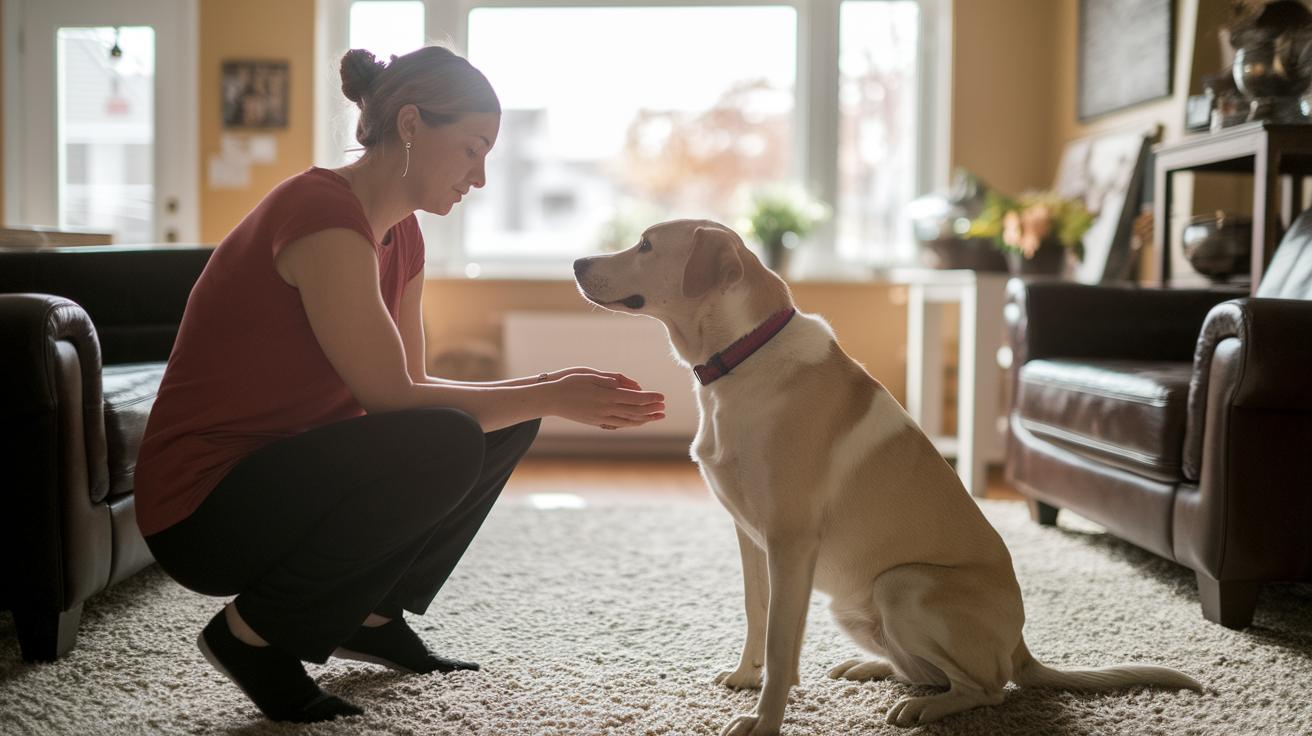
Sometimes training doesn't go as planned, especially when your dog faces challenging situations. When this happens, using special training methods can really help. For example, counter-conditioning (which means changing your dog's feelings about a trigger) and systematic desensitization (gradually getting your dog used to a trigger) can shift how your dog reacts. Start by changing your training space, vary the distance and the distractions around your dog. Then, work on giving treats at just the right moment and repeating a calm cue. This method turns setbacks into lessons, helping your dog gain better control and feel less scared.
Barking and Impulse Control
Reducing too much barking takes practice. Try these simple steps:
- Watch for calm moments and give a treat right away.
- Use the same gentle cue each time to remind your dog to stay quiet.
- Slowly add more distractions as your dog gets better at staying calm.
Each small step helps your dog learn to choose measured, calm behavior over sudden, noisy reactions.
Aggression Desensitization
If your dog shows signs of aggression, start with very gentle triggers in a safe place. Follow these steps:
- Begin with mild triggers that upset your dog just a little.
- Gradually increase the intensity as your dog grows more comfortable.
- Always use treats and kind words to reward calmness.
- Check in often to be sure your dog is doing fine.
This steady and caring approach helps lower aggressive reactions over time while keeping your training sessions safe.
Specialized Equipment and Tools in Expert Canine Training
When training your dog, the right gear makes a big difference. A well-fitted collar, a front-clip harness, and a consistent clicker work together to send clear, simple signals. They support reward-based training that builds trust and encourages good behavior. Choosing items that last, adjust to your pet, and keep them safe makes every session effective and stress-free.
Interactive toys and target sticks add extra fun and mental challenge to lessons. They offer new ways to reward your dog without using harsh tools. These items help your furry friend focus by linking clear cues with the right actions. This careful choice of equipment boosts your dog’s learning and overall training success.
Real-World Case Studies and Further Training Resources

A new 4-week board-and-train program showed great results. Leash pulling dropped by 80% and recall mistakes went down by 70%. This proves that advanced obedience training can change your daily routine and help build a secure bond with your pet. The program used science-backed methods that track progress and give clear, measurable improvements.
Therapy dog programs are also benefiting from these techniques. In training sessions, dogs take part in socialization exercises that teach them to stay calm around strangers and other distractions. These drills create a relaxed environment that works well for both therapy dogs and family pets when out in public. Helpful video tutorials with clear cues and distraction drills support both pet owners and trainers.
Professional directories and training academies offer extra guidance through detailed programs based on behavior analytics. Their focused training plans check key performance markers and provide steady support. By using these expert resources, pet parents can follow structured methods that boost obedience and lead to lasting, measurable improvements in behavior.
Final Words
In the action, clear, step-by-step methods boost training progress and change daily routines.
The article laid out precise command work, focus drills, and reinforcement scheduling.
Each section showed how practical methods shape behavior and connected training with real-life benefits.
Advanced obedience training techniques for dogs truly work when built on trust and consistency.
Every practice session fuels growth, leading to a happier, well-behaved companion.
FAQ
How to train your dog advanced obedience?
The advanced obedience training builds on basic commands by adding refined signals, distractions, and clicker techniques. It focuses on short, structured sessions with positive reinforcement to boost calm, reliable behavior.
What is the 3 3 3 rule for dogs moving?
The 3 3 3 rule for dogs moving emphasizes consistency. It means using three-minute sessions, three repetitions per movement, and repeating these three times daily to help your dog adjust smoothly.
What are some advanced dog training commands?
The advanced dog training commands include refined cues like “heel,” “back up,” and “stop at a distance.” They are practiced with precise timing and added distractions to ensure reliable performance in real-world settings.
What is the 10 10 10 rule for puppy training?
The 10 10 10 rule for puppy training involves 10-minute sessions with 10 repetitions per command, repeated 10 times. This approach helps build a strong foundation and consistent behavior quickly.